12
Nov

Lots of buzz and rumors today that on November 15, Facebook will launch the Facebook Titan offering and the speculation is that it’s a Gmail killer.  From the sound of it, Titan is going to offer email addresses ending in @facebook.com and that once people have that, there will never be a reason to go back to Gmail.  It’s a little surprising they don’t make reference to the impact this will have on Hotmail, since I think Hotmail is still going strong . . .

RaikesBack in May I wrote a post about how Facebook already is a Gmail killer, and the whole point of that post was that you don’t need the @facebook.com piece to send a message.  Once you find a person, depending on their security settings, all you have to do is click “send (name) a message”

Have a look at the example I have on the left.  Jeff Raikes was a long time Microsoft executive who now runs the Bill and Melinda Gates Foundation.  Maybe not as famous as Mark Zuckerberg, but still an industry mogul, or titan in his own right.  Just being able to click “send Jeff a Message” – not knowing any other contact details about Jeff, I could send him a message.  This is really powerful, and I use this feature a lot when I read an article about someone and I want to reach out to them with a comment.  It’s fast and easy and nine times out of ten the person responds right away.

Now I know the Facebook people tend to be pretty smart, it seems like needing the email address with the @facebook.com is going to be redundant, so I don’t know why they would do that, unless they think it’s just too complicated to advertise the fact that in Facebook you can send email to people without knowing their email address.

So I am going curious to see how this flies . . .or sinks, like the Titanic.  With a name like Titan, if they do fail, I expect we will see the name Titanic in a lot of the articles – somewhat like when people said “next of Kin have been notified” after the spectacular failure of the Microsoft Kin device earlier this year.  As an aside, I have seen the new Windows phone and it has some very differentiating features, especially social ones that should make it a success.

Let me know if I am all wet, but I just don’t see how Titan is good rethinking.

-Ric

Category : Uncategorized
31
Oct

DoxoLogoAbout a week and a half ago, doxo launched.

Doxo was founded by a guy I have known for almost ten years, and he’s one of those guys who comes across as very funny and very laid back, but at the same time he’s always the smartest guy in the room.  By a lot.

I had heard about doxo about a year ago, and I knew that it had something to do with billing, but that it was very much a secret as to what they were up to, and for a lot of reasons I just hadn’t crossed paths with my friend Steve for a while, so I hadn’t gotten the chance to ask him for more information.

So then they launched and I learned that it’s an online bill pay site that’s free and doesn’t have any advertising that is designed to eliminate paper from billing  (the billing organizations pay doxo and that’s how they make their money).

Seemed like a great idea to a guy who hasn’t dabbled much in the world of online bill pay, until I had lunch last week with my friend Keith, and Keith asked “how is that different from online banking at Bank of America?”  Great question, I thought.  “I don’t know,” was my response, “but I am meeting Steve on Friday and I will ask him.”

Unsurprisingly, Steve’s answer to the question confirmed that as always, he is the smartest guy in the room.  There are several very compelling reasons why this is a really big deal:

1) Free.  Free isn’t really one of them, but it’s great.

2) No ads.  While it may not seem like a big deal, it is.  You and I might ignore the ads on the Bank of America site, but the merchants don’t.  So my visa company agrees to share my billing information with Bank of America for me to see (and pay), but when I look at it, Bank of America bombards me with ads from competing credit card companies, and that obviously makes my credit card company eager for an alternative.

3) Data.  Data is something the Bank of America service doesn’t offer (and I don’t want to pick on B of A, but WellsFargo is so bad at online bill pay, they really aren’t worth mentioning here).  My credit card company and Comcast and Puget Sound Energy, and The New York Times are all able to push the information to B of A about wbat I owe them, but B of A doesn’t store any of the information.  Doxo does.  So if you want to go back a month, or a year, or whatever, doxo has all of the data of all of the billing you have ever done with them.  That’s big.

LinkedIN4) Like Facebook or LinkedIn.  Bank of America is the one that has a “deal” with the billing organizations.  Not you and the billing organizations.  We all know what it means to “friend” someone on Facebook or add someone to our LinkedIn network.  Once someone accepts that invitation, it opens a trusted exchange between the two parties.  That’s what doxo does between us and the billing organizations.  Just like friending, the relationship is between us and the billing organization and that’s what unlocks the trusted exchange between parties.  That’s a really, really big differentiator.

So now I get it and I am eager to start using doxo.  You should too.

-Ric

Category : Uncategorized
25
Oct

HNIn the late ’90s, the site hotornot.com was very popular.  It was a strangely addictive way to rate photos of people on a scale of one to terms of how “hot” you thought they were. I went out to the site this morning to see if the site is still alive, and while I was a little surprised to see it alive, when I saw they have turned it into more of a dating web site, that made sense.

But for anyone who ever spent any time on that site, once you start rating pictures, it’s hard to stop and as such it’s a great way to collect a lot of feedback.  Though by itself, that data isn’t useful to much of anyone because you don’t know who is providing the input.   Because of that, if a 44 year-old man like myself were to post a picture, I would have no way of knowing whether the ratings were from 22 year-old women or 44 year-old women or 88 year-old women, so irrespective of the feedback, I wouldn’t really know any more than I knew before.

AliceHowever, if the age, gender, and zip code of the person were known, that would be a different story, and as I have blogged before, that’s exactly what alice.com does on their retail web site and gives that data back to advertisers who put ads and coupons on their site.  While I think Alice is going to be a huge success, their site remains a retail experience for the end user.

SwaySwaySwayA new company launched last week that in many ways combines the addictive element of hotornot, and the business data feedback element of Alice.  It’s called Swayable and as their tag line suggests, they want to know what you think.  But instead of just one product and a one to ten scale of “hotness” that you get to choose, it’s an either/or vote. You have to pick “A” or “B” and that can be the Knook reader vs. the Kindle or the iPhone 4 vs. the Android, or any number of other things.  After you choose, it tells you the summary of how others have voted in percentages.  Like hotornot it moves very fast and it’s fun.  It’s still in beta so right now some of the swayables are a little nutty/silly, like in one case it was the same picture on both sides of the sway, in another it asked you to choose between an apple and a pear, but as those kinks get ironed out, I wouldn’t be at all surprised to see swayable really take off.  For one thing, all of the content creation is in the hands of the users, which is a huge thing to be able to “outsource” to your user/customer base.  But anyone can be a customer, so I suspect all sorts of companies will create swayables for their various products and services so they can get real time feedback (votes and comments) from the people voting.  Since Swayable knows your age, gender, and zip code, they can share that with the creators of the swayable.  It’s a brilliant way to collect feedback.  my guess is that usage will sway toward younger generations, but that’s fine.    The bottom line is that Swayable represents some great rethinking in the area of market research.

On top of all of that, if you look at the bios of the management team of Swayable, it’s not just a bunch of teenagers in a garage.  My vote goes to Swayable.

-Ric

Category : Uncategorized
23
Oct

CaptchadOK, it’s more authentication than security, but Captcha which sounds more like Boston slang than the acronym it really is (Completely Automated Public Turing Test To Tell Computers and Humans Apart), has done some really great rethinking in the area of security.

Most of us by now have had to enter in the words that are on the screen and we enter them knowing that it’s to make sure we aren’t computers.  That, as I learned today, is mostly from the company called Solve Media.  We have had put up with it for a while now, and if you are like me, some days, the words are pretty blurry, and I worry about rejection at times.

That said, in the last year, I have noticed that the words have become more relevant to the site I am on, and that has made it easier to read the words.

CaptchaThen yesterday I went to a brand new site called Swayable (which is GREAT and I will blog about them soon, and the same goes for Doxo).

My first reaction was WOW.

And then duh!

Why the heck didn’t I think of that?!

Sell ad space on the Captcha screen, and force the user to type the name of the advertiser as the way to to prove they are human.  That has got to be a candidate for the best peanut butter in chocolate collisions of technology and marketing of all time.  You accomplish the goal of verifying that it’s a human, and at the same time, the marketer paying for the ad space has evidence that you at least saw the name of the company paying for the ad – that is just brilliant.

SolveThe person cannot move forward without reading and to at least some extent understanding the ad.  I guarantee that if I had seen the same ad on the Captcha screen and not been forced to type a word from the ad, I would have completely ignored it.  Now I am not sure the ecomagination message (above) is relevant to my life, but at least GE knows that I looked at the ad, which is ultimately the goal, but up until this point, they didn’t have a way of getting evidence that I actually looked at their ad.   Big win for marketers, and a relatively subtle shift for the Captcha.  Solve Media is the company behind this innovation – if you go to their web site, they have a very clever video that explains it.

This is going to be added to my standard talk about rethinking because it’s so great.  I LOVE this.

-Ric

P.S. Look for the Doxo and Swayable blogs entries next week.

Category : Uncategorized
19
Oct

For those of you familiar with the book Rethink, the core idea is the “how” trap that we all fall prey to, and I have witnessed a lot of “how” traps over the years, but I think I may have found the king of all time – this one is almost 1,700 years old.

I recently read Magic“Magic By Numbers” by Daniel Gilbert and as interesting and entertaining as the article was, talking about how we get attached to certain numbers, like 24 (hours in a day), 10 (for roundness of stock price), and so forth, one of the core ideas in the piece is that we are at least 16% over medicated when it comes to prescription antibiotics.  My back of the cocktail math was that if the US Pharma industry was $315B in 2007 (fact), and a third of that was antibiotics (that’s a guess), then if 16% of what we are spending is too much, then that’s about $16B in spend we could stop right now.  Maybe it’s $10B, maybe it’s $30B, it’s a big, big number.

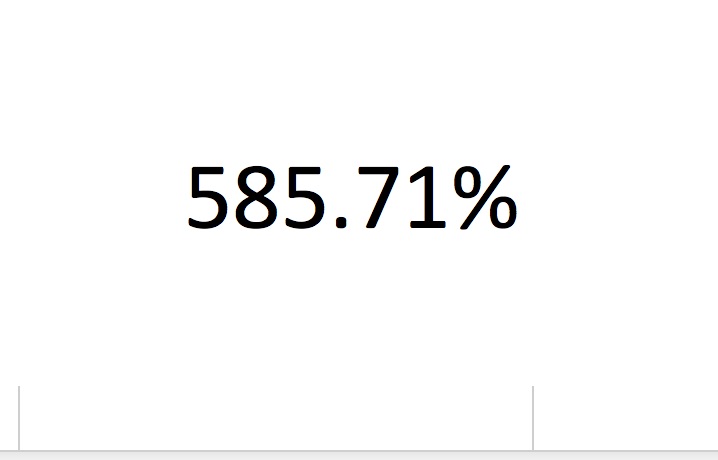
You can read the article, but the gist of it is that doctors have been prescribing a course of medicine for a week for a long long time, and the only real reason for that traces back to 321 A.D. when Constantine established the seven day week.  There is no scientific evidence that seven days is the right treatment.  In fact, Gilbert says that recent testing has shown that six days of antibiotics is no less effective than seven days, and if that’s the case, then we are at LEAST over medicating and thus over spending by 16%.

16% is a huge number in any industry, and when you have a number that hasn’t been seriously questioned for over 1,600 years, you have to wonder what other big opportunities are lurking out there, where we have gotten so attached to how we do everything that we can’t see the obvious need to test out assumptions about “how” we do it.

PillsBeyond that, assuming Gilbert’s evidence is scientifically accurate, and I have no reason to believe it isn’t, then why isn’t this front page news? Why isn’t Anderson Cooper talking about this right now?  Why is this buried on the op-ed page of the Sunday New York Times?  If we have the evidence, why don’t we start making the change to dial back the over-medication of America?  Even if this isn’t considered hard science yet, isn’t it worth a few million in spending just to test if it is right, to see if we can cut spending by that much?

-Ric

P.S. The other big takeaway from this article was learning what the Fibonacci series is.  I can’t wait to use that in conversation.

Category : Uncategorized
18
Oct

PaperThere were several interesting articles in the paper over the weekend, but one ad in particular caught my attention. It’s a new campaign from a huge paper company I had never heard of before called Domtar.  The ad was really effective because it caught my attention and I followed up to read on about what the campaign is about and who Domtar is and it was more interesting than I expected.  My friend Tracy, who is a marketing and branding person told me that that word because is one of the three most effective words at getting us to stop in our tracks when it comes to a message, and this one did the trick.  And that’s why I put the word in the title of this post about incentives.

BrocThe article “Let Them Eat Brocolli” by Anemona Hartocollis focuses on an increasingly heated debate about whether people who are on food stamps, the federally funded program for people who don’t have enough of their own money for food, should be able to buy luxury goods like fancy shrimp, or  less healthy foods like sodas with their food stamps.

As with most rethinking topics, my overall conclusion was that people aren’t taking a step back and thinking about incentives and what will cause people to change their behaviors which is a topic that touches every organization in every industry.

The debate gets a little bit more complex when you understand that the really big food companies make some products that are less healthy than others, and getting a big push to get people to eat healthier hurts those big powerful food companies, and the realities of business are that at least in the short term they are going to resist.

But as incentives go, the discussion about whether someone has a dollar in food stamps, to tell them they can spend the dollar on broccoli but not a Coke not only seems a little condescending and demeaning, it just doesn’t sound like it would work to me.  Overall people know the difference between healthy food and unhealthy food, though as I have said before I do think there’s a huge education gap in how fatal obesity can be (usually through diabetes and subsequent other downstream diseases).  So if people know the Coke is less healthy than the broccoli, why do we do it?  We don’t have enough will power for one, but it seems a lot of people (myself included) need more of a carrot, or rather an incentive to make the smarter choice.

So what’s my recommendation?

Instead of the big brother banning of use of food stamps for less healthy food, come up with an incredibly simple model where food stamps are twice as valuable for healthier foods, so the one dollar in food stamps still buys me a dollar’s worth of coke, but now it’s worth two dollars if I buy the broccoli with it.  If you could make ads and billboards showing the pile of healthy food you can get for $50 (it would be $100 worth in this model) next to a much smaller pile of the unhealthy foods you get with that same $50.  For the people who are truly concerned about putting food on the table, this message should be very clear and simple.

The bottom line is that you need to know what will really cause your target to behave in they way you want them to, and being heavy handed, in my experience, often results on the opposite reaction (unless of course you are actually the parent and the child has no say whatsoever).

While this isn’t a magic wand solution, there will be debates about which foods are healthy and which are not.  There are lots of ways to do that, ranging from the percentage of trans fats, or even the ratio of trans fats and corn syrup to some other factors, seems like an interesting one, but I expect there are others.  There are also some implementation issues in this at the cash register, but taller mountains have been climbed and I think that for the overall impact to the health and wellness of the population, in addition to the reduction in obesity, which would translate directly into lower health care costs, this is all worth figuring out.

I’d love to hear your feedback on this.

-Ric

Category : Uncategorized
14
Oct

Some things in our lives are easier because technology made them easier and that’s good.

But other things come about purely because we are lazy, and time and again we have seen that there’s a lot of money to be made banking on the increasing laziness of the consumer.

SaladDazeExhibit A is the pre-cut, pre-washed, pre-mixed bags of salad that are so common these days.  While I will grant that the technology of the bags is a huge leap forward in food preservation, still, are we all really too busy to cut up our own salads? Evidently we have been convinced that we are.  One tidbit that I love is that in many cases these bags have things that we would never choose to buy as individual items, like dandelion leaves.  Once just a by-product of weeding, now it takes up as much as 20% of these bags. How clever is that?!  We are now eating what used to be garbage, and paying a premium for the privilege to not cut our own salad.  That’s not to say that these ideas are a guarantee.  I remember seeing pre-cubed cheese in the cheese section of my grocery store once and I haven’t seen it since.  Thank goodness we don’t think we are too busy to cut our own cheese.

BlackOn to Black Umbrella. Black Umbrella preys on our laziness to prepare for emergencies.  Sure there could be an earthquake and I would need all sorts of food and other supplies and I would need to know what to do if the power goes out and so forth. But there wasn’t an earthquake yesterday, and if I am too busy to stop and chop my own salad, than maybe my emergency preparedness planning can wait another day . . .Enter Black Umbrella – they sell emergency preparedness kits and training so that you don’t have to keep postponing it.  My guess is that they will do very well.  It’s actually something I have been meaning to do for some time, so I may just raise my hand and say “Yes, I am THAT lazy.”

What will they rethink next?  If you have some other or better laziness examples, let me know and I will update this post (and give credit where due).

-Ric

Category : Uncategorized