Archive for June, 2010

30
Jun

Some people may think I have a crush on video rental company Netflix because I talk about them so effusively.

Maybe.

1_NFBut this particular commentary is about something they are doing wrong, or at least not doing as well as they could and part of this stems from how much their brand has evolved over the years.  When Netflix started out, they set out to keep you on the couch.  The only way you could get videos from Netflix was in the mail.  They didn’t want you to go to the theater.  But as they evolved, they started collecting feedback about movies we have seen irrespective of whether we saw them through Netflix and that then fed their recommendation engine so they would be better about letting us know how likely we would be to enjoy a film (which as users know is uncanny how good it is at using our feedback to predict what we will like).  So now that we can review any film we have seen anywhere, we can now stream videos directly from their site (amazing experience on an iPad, by the way), and we can reserve movies that aren’t yet available, their brand has really evolved.  The Netflix brand now extends to any film experience we have in large part because we can rate those films which leads to an even richer relationship with them.

So a quick recap – what is Netflix good at:

1) Having an incredible catalog of films

1) Listening to, and capturing what we want to see

2) Capturing our feedback and digesting it so they can recommend (or discourage) future viewings

3) Matchmaking between viewers and films

4) They also happen to have one of the best user experiences on their site.  Very click-efficient (alice.com should take note)

SIFFLast year I was on a panel with Deborah Person who runs the largest film festival in North America, the Seattle International Film Festival (better known as SIFF), and the discussion turned to alliances and I commented that Netflix would be a great partner for SIFF.  Initially Deborah’s reaction was that Netflix is competition for SIFF, but I pointed out that was the Netflix of old where they didn’t want us to leave our couch.  Things have changed.  That, by the way, is the lesson for all of us – companies do change and someone who was competition yesterday, may now be your best ally.

The films at SIFF are new films that are looking to get picked up by distributors, so Netflix hasn’t heard of any of these films yet but if they could get entered into the Netflix system, Netflix would be able to start recommending specific films for specific SIFF viewers.   That match-making between viewers and films is one of the toughest things that film festivals have to go through, by the way.  That’s already a big win-win for Netflix and SIFF, but now if the viewers actually go in and rate the films they have seen, Netflix now has visibility into that information and even if some of these films never get picked up, Netflix may want to add them to their catalog and add an even more detailed dimension to their catalog, especially with the increase in use of streaming video which I was recently told is already 55% of their viewership.

The other piece of this that may be more useful for SIFF than Netflix (but I could be wrong on this) is if they do a diligent job of capturing this information – without compromising any personal information, they can share the data of who liked, and didn’t like the films, by age, gender and ZIP code (which is how alice.com makes their money).  That would add a whole new dimension to movie marketing – if it’s already known which demographics like the film, there’s much lower risk to the distributors about where a movie will be a hit.

So that’s the kind of rethinking Netflix needs to do, not just with SIFF, but every movie festival.  It’s very much in line with their brand evolution and the film festivals and the distributors get a get boost as well.

-Ric

Category : Uncategorized | Blog
29
Jun

SnifferMost innovations we hear about these days involve some new technology, or some new application of an existing technology, but some of the most interesting and exciting innovations go in the opposite direction – seeing that something incredibly simple and low-tech is a better “how” to do something.

When it comes to testing and surveying for things, the use of animals is not new.  Dolphins can be trained to look for mines, pigs are used to sniff out truffles, and we regularly see dogs at airports sniffing our luggage for drugs.  I have been tempted to put some other smell on my luggage (like bacon) to get a reaction from the dog, but I don’t need that kind of attention, and then I am stuck with luggage that smells like bacon.

But a much more interesting king of testing has been devised.  I read this article in the paper today about the use of bees at a German airport Beesto test air quality levels.  It’s really simple, they simply collect the honey from the bees and test it for toxins like certain hydrocarbons and heavy metals.  As we read about bees disappearing from our farmlands, this seems like a creative way to re-introduce them into some areas and not only re-grow the bee population, but also learn a lot about air quality.

Not only is that really smart and easy and cheap, it makes me think that there have to be lots of other creatures that we can use to “listen” to water and air quality.  It’s well known that some creatures are immune to various toxins, while others absorb them.  The use of honey from bees is great because you don’t have to kill anything and it’s highly repeatable.  My bet is that you could find several species of fish and birds that capture toxins and whether you collect feathers or droppings or whatever, I bet we could learn a lot more about the health and wellness of our environments, first as a snapshot, but then even more valuable would be the trend data so when you see a spike or just a shift, you know when it happened which makes diagnosing the cause a lot easier.

Great rethinking.  And I love that it’s so low tech.  I try to keep a repository of low tech examples of rethinking, and while I will add this to saltthe group, my favorite is still why Morton Salt uses their trademark phrase “when it rains it pours” – the answer is magnesium carbonate, but the more interesting part is what problem it solved.  Any guesses?

-Ric

Category : Uncategorized | Blog
21
Jun

“All the news that’s fit to print” is the longstanding motto of The New York Times that has served them well.

What a great brand.

NYTSFashion, sports, science, politics, sports, business, arts, travel, the arts, etc, it’s all in there and extremely high quality reporting every day.  Incredible photography as well.  They made the shift to online as elegantly as any of the major paper publishers and I believe that they will survive the growing trend of people  not reading newspapers any more as shorter digital content becomes more prevalent.  Do I think my son will ever have a paper delivered to his house?  No.  And I think the expression “it was in the paper Wednesday” will fade because we don’t think of news as the daily chunk that a newspaper is, we get our information from many sources throughout the course of the day.

That’s just the way things are going.

YATBut they have figured out a way to hedge their bets with The New York Times Store.  I have been aware of the store for a number of years (as far as I know it’s only an online store – I see the ads printed in the paper that is delivered to my house every day).  I have seen countless ads for the store with the timeless image of Y.A. Tittle, helmet-less after a crushing loss as a New York (football) Giant.  It sells for about $200 signed by Tittle.  The tittle photo is one of many in a standard ad that has run for the store for years.  That has always struck me as a simple but logical extension of the brand of the paper to sell copies of the photos it prints.  Probably not a gigantic business, but worth the effort.
Yawn.

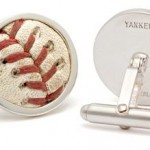
But things have taken a turn for the far more interesting.  Now the store is selling things that have nothing to do with content – things that were never printed in the paper.  They have extended it to all things New York in a brand-consistent high quality way.  Now you can buy everything from “game used” ball cuff links made from balls actually used in New York Yankee games.  You can also buy an actual brick from the old Yankee stadium that was recently torn down, and I would trust the authenticity of these things entirely because of my trust of the brand.

LinksAnd to top it all off, they included off-the-charts great customer service which is consistent with how the customer service at the paper has performed.
I actually got one of the bricks from Yankee stadium for my Dad for Father’s day this year (he grew up going to that park) and the order was delayed.  How did I know that?  They called to tell me.  I had also ordered something else, and they sent me the wrong thing, and they called me to apologize even before it arrived.  After I spoke to an improbably responsive “Ryan” twice in about five minutes, the items were overnighted to me (at their expense) well in time for father’s day.  When I asked about the logistics of returning the items they sent to me in error, they simply said “we will worry about that later.”

I haven’t had service like that in years.  It was one of those rare customer service experiences that was so great, I told several people about it.

This makes so much sense to me, that The New York Times rethinks their brand in a direction that has no dependency on how many papers they sell.  My prediction is that we have only begun to see what this store is going to offer – it’s not going to happen in a New York minute, but in the coming months and years this store will be a very common place for us to shop for presents and gifts.

-Ric

P.S.  I am not a big believer in events like Father’s day, and I know my Dad doesn’t care about it at all, but he sure thought that brick was cool.

Category : Uncategorized | Blog
16
Jun

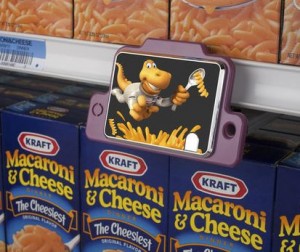
AMS3GTV is the brainchild of Automated Media Services, and they are putting little screens in stores right next to products they promote and show commercials for those products.  The notion of having what amounts to a tiny TV screen next to the Kraft Macaroni & Cheese would have sounded bizarre 20 years ago, not just because of cost, more because we didn’t think of TV screens being in very many places.  Screens are everywhere today (mostly because of the low cost) and so we are less surprised to see them at restaurants and in elevators, etc.

As it stands, the 3GTV service that’s set to launch later in the year is a huge breakthrough because it’s really the first time consumers are TV-pitched at the very moment they are deciding which product to buy, the so-called “moment of truth” and the bottom of the sales funnel. So stores and manufacturers and advertisers will get real time data about the impact, which will probably be at least worth the trouble for the advertisers.  So that in and of itself is a big deal and that’s why Stuart Elliott wrote Showing TV, and Commercials, on the Shelves and in the Aisles in The New York Times today.

But I think this is a much bigger deal than that because I think 3GTV is going to end up being the gateway to some much cooler stuff, tapping into the great rethinking that alice.com has done, but also making social networking sites like Foursquare much more interesting as a business.  Currently Foursquare makes me want to utter something that’s more likely to come out of the mouth of Rahm Emanuel (and then offend Sarah Palin) because it really doesn’t let you do anything useful.

AlAs Alice.com has figured out, most manufacturers don’t care to learn our names.  Just knowing our age, gender, and ZIP code is what they want to know so that they can get more targeted in their marketing and product R&D.  People using sites like Foursquare allow you to “check in” to a location and not that much else, but if you can now marry that information in real time with the 3GTV, then next step in the techno-evolutionary chain is that Kraft is going to know that (if it’s me) a 44 year-old male from the 98144 ZIP code just entered the store and they will know in my case that I don’t ever buy macaroni & cheese so I am not a very good target, but the next person to check in happens to buy it a lot, then Kraft (or the store) may want to flash a coupon on the screen that that consumer can “pick up” with an app on their iPhone (I could pick it up to if I saw it, but I would ignore it), or the coupon can be sent to their mobile phone (still all anonymous – PayPal figured that out).  Then at checkout all of that gets reconciled (that isn’t elegant today, but I am sure someone is already hard at work writing that software).

ShPersonalized, location-based advertising and coupon-ing is coming soon, and every shop from Safeway to Shultzy’s Sausage stand will benefit.  Helping the big guys is interesting, but to be able to scale down to the mom and pop shops is where this starts to become gigantic.  For the big guys, it allows them to more actively manage their inventory.  If they know the ad or the coupon is going to lift sales of a given product, they know when to stock more of it.  Even bigger, when inventory is time-sensitive, Shultzy’s may have pre-cooked 2o hot dogs for lunch, and as the lunch hour winds down, they still have nine left, they can push out coupons for the last ones to people walking by (that gets beyond Foursquare’s store idea, but it should also be easy to check in to a neighborhood).  At the point if the alternative to not selling them is throwing them away due to spoilage, then Shultzy’s might send coupons for a free hot dog knowing that they will at least probably sell a soft drink and get some money.  The same spoilage issue works really well for grocery stores when produce and meats are getting to the end of their shelf life. Really powerful.

g2Now things are really cooking with connecting marketers with consumers once we get this rolling.  My guess is that Groupon, the ridiculously (their word, kind of) successful coupon company that just closed a $135 million round of financing will be in the mix.   Add them to the list of “I wish I had thought of that!”  Placebook and PointInside will also probably be in there.

Great innovation that will lead to even bigger ones.

-Ric

Category : Uncategorized | Blog
10
Jun

People use the term “green” as inherently positive.  If you are reducing the carbon footprint of something, or the emissions of something, that’s something that should be pursued.

The reality is that unless you going green saves you money in some quantifiable way, most organizations are going to be skeptical of the investment, especially in a climate like the one we are in now.

So all you need to do is figure out how much money you will save and your business case is as good as solved, right?  Wrong.  The fact is that even though we find ourselves in 2010, there is still very limited data about specific benefits (cost reductions or the increase in the value of a property) of going green, whether the subject is IT or whether it is something as basic as retrofitting a building with more efficient windows and heaters.  To make matters more complicated, there is the notion of a collective carbon footprint, which is simply to point out that just because you outsource some technology to a third party hosting organization that turns something into a cloud service, in many cases while that reduces your carbon footprint, you have really just moved the work and the overall carbon footprint is the same.

The “trap” is to dive into the green movement without a clear set of goals and target metrics.

So here are some thoughts on where to start on the green journey:

1) Identify the candidates.  There’s a huge amount of commonality in the work that goes on in every business, and operations in IT is a good example of that. Identify those areas of your business that are non-core (like IT in most cases).  Techniques like the one in the book Rethink are effective because they are inherently more objective than something like a process workflow.

2) Measure the “as-is” state.   Measure all of the costs related to the areas that are candidates for improvement so that when the project is over, you have clear and credible data to compare it to.

3) Set your target metrics. Do some research to see what has been tried and been successful and get some actual success metrics to define targets to help make your business case.  In some cases you will have to be a trailblazer, but that should be a small percentage of the time in your early green endeavors.

4) Look outside IT.  Look at other green successes outside of IT and see if you can learn from their approach, their metrics, and so forth.

5) Look to the future.  On June 10th, a group calling themselves the American Energy Innovation Council produced a report called A Business Plan For America’s Energy Future. This small group includes Microsoft Chairman Bill Gates and G.E. CEO Jeff Immelt, among a few others and they are asking the US to triple the amount of money invested in researching the future of energy.  What does this have to do with green IT?  Well we are already using energy in ways we couldn’t have predicted ten years ago, it’s a safe bet that in ten years, things will again be very different and starting to see how usages and sources of energy change, this is also going to change cost/benefit models and that’s something to keep an eye on.

6) Get funded. In this tough economic climate, even something that is going to save money in the long run isn’t going to get funded because the organization needs greater cost savings faster, so you need to test those waters.

7) Execute.  Rolling out your green effort, like any project, will take planning, and rigor and discipline.  Also like any other project, there will be surprises and those need to be carefully documented in case they can influence the success or predictability of future green projects.
8) Measure the results.  Having measured the “before” you should now be able to measure the “after” and produce some concrete results on the short and long term benefits of the green effort.

CASE STUDY

While it may seem an imperfect analogy, current efforts to retrofit buildings to reduce the gallons or oil or water, or kilowatt hours used have many similarities to IT.

1) Both are considered low hanging fruit for savings in the green movement.   Building retrofits are much older. In the US, the government has subsidized efforts to retrofit buildings since the 1970s, but even with subsidies adoption has been slow.  Luke Falk, a project manager at the New York State energy Research and Development Authority said that these projects don’t happen very often because so little is known about energy usage that people can’t really even make credible assertions about how much energy will be saved.

2) More needs to be understood about “as-is” energy consumption.  While many people are smarter about their IT energy usage compared with buildings, many are still not and that will continue to slow the green movement.  Falk also points out that “there is no national database that we know of that records the results.  Likewise, utilities across the country run Energy Star programs, but there is no central aggregated data base of the results of that effort.”

3) More case studies of results are needed to make the savings real. In New York City, a group led by Deutsche Bank America Foundation (DBAF)is working to collect those case studies on retrofits.  According to Gary Hattem, the president of DBAF, “the largest obstacle to making these practices go mainstream is data that will convince building owners to retrofit their properties and at the same time increase underwriters willingness to finance the projects.  The idea here is that if underwriters can determine a predictable savings from retrofits then they can create a financial instrument backed by these savings to sell on the open market.”

4) Look at the larger economic impact. When a green project is undertaken, that is work and so beyond the cost savings from the project and the eventual increase in the value of the property, there is also the creation of jobs and work and that’s something that should also be taken into consideration.  That’s obviously more interesting to cities that want to retrofit buildings, but it’s also something worth noting in the IT world.

WHERE TO START

Up above in step one, I mentioned identify the candidates for the green work.  In the case of buildings, the notion of motion activated lights that turn themselves on is an obvious way to save money.  Similarly, a lot of servers and technology are left running all the time.  Thinking of ways to turn them off or have some form of “sleep” mode in bulk can be another way to save money.  Certainly looking for ways to reduce the amount of paper that is used is another common example.  At Microsoft, when it is time to sign annual reviews, that is all done electronically without a single piece of paper, and for a company the size of Microsoft, that’s big.  In the case of the “larger economic impact” having people share workspaces and having the option to work from home can not only increase the amount of time the employee works, it will reduce the amount of gas they burn and that’s something that in time can be captured and quantified.

That’s a start.  I think the green movement is fantastic, but I also know that business is business and unless you have some concrete predictable benefits, your efforts may not get very far.

If you have questions or suggestions or feedback, I would love to hear them.

-Ric

Category : Uncategorized | Blog
9
Jun

MayorBRAVO!

I have a lot more respect for Mcdonald’s after hearing how they are handling their recall of a Shrek glass that has trace amounts of Cadmium in the paint on the outside of the glass.  Cadmium is bad news.

Consumer Reports says that typically 10 to 30 percent of consumers respond to a recall, and since there’s nothing worse for PR than making a kid sick (just ask Jack-In-the-Box and Odwalla who had disastrous consequences from e-coli problems), McDonald’s is doing something extraordinary – they are paying customers to bring the 12 million glasses back.  Customers had to pay for the 3-D glasses to begin with, but McDonald’s is paying them more than the customer paid, even if you factor in taxes.

GlassShrekWhile that could add up to a $36 million cost for McDonald’s, in addition to the original cost of the glasses, this is so smart for them to do because it sends the right message that they don’t want to do anything that would harm their best customers, kids.

It also turns out to be great press for McDonald’s that they are doing the smart thing here.   With all of the news about problems with obesity in this country McDonald’s still needs to do some further rethinking on their menu, but for a problem like this, I really tip my hat to them for how they are handling this one.  It’s almost enough to make me run out and get a Filet-O-Fish, but my McDonald’s days are behind me.

The only strange part about this story is that McDonald’s says that they are certain the glasses didn’t come from China, but they don’t know where they came from.  If you don’t know where it’s from, how can you be so sure it’s not from someplace?

-Ric

Category : Uncategorized | Blog
5
Jun

GMSomehow, G.M. seems to be not only surviving but thriving after almost being left for dead a couple of years ago.

Lately they have been in the news quite a bit highlighting their plans to pay back the US government early for the bailout funds they received.  They are talking about an IPO to generate the cash needed to complete the payback.  Of course some of their recent success is the result of cash-for-clunkers and the continued struggles of Toyota and not because of anything smart they did.  But I think I speak for a lot of people when I say “yawn.”  Great for them, and really great for US jobs, but there wasn’t much to really get excited about regarding G.M.

Until today.

Saturday there were two articles in the paper about G.M., and both were done by Nick Bunckley.  The first one that wasn’t a WOW, but showed signs of intelligent marketing life – Luxury Car As a Gift Stuns a Few, tells the story of how G.M. gave a Corvette to the pitcher Armando Gallarraga of Detroit who was denied becoming the 21st pitcher to throw a perfect game in major league history only because of a blown call at the end of the game.  The article says the gift raised some eyebrows given that G.M. still owes a lot of money, but anyone who knows anything about brand and marketing knows that this was a very smart move.  Yes. it’s a $50,000 car, but it didn’t cost GM that much to make it, and it was a low risk bet that the story would get picked up by ESPN and national news, and that sort of coverage is worth way, WAY more than $50,000, never mind the goodwill injection the brand got.

OK, so that was just a smart move, and an agile one.

The WOW article contributed by Mr. Bunckley was G.M. Forms $100 Million Technology Venture Firm, and that’s huge for G.M. because implicitly it acknowledges at least three big things:

1) They Are Stale.The reason G.M. almost died in the first place was because they became stale and boring and didn’t innovate at all.  Of course people stop buying your product when that happens, unless of course you have a monopoly like a Comcast or a Microsoft.

2) People want technology in their car. If we have learned anything about cars lately, it’s that people want to do a lot of things other than driving in them.  G.P.S. and cell phones were the beginning, but as those devices mature you can search for restaurants and other locations, get traffic warnings, customize the music you hear, show movies (in the back), etc.  Just as Starbucks liked to be thought of as the #1 place people go to hang out beyond the home and work, those of us who spend hours and hours in the car, the car is on the verge of becoming a destination in its own right, ironically.    Though somewhat subtle, this is a transformation of how we think about our time in the car and there is a LOT of money to be made in rethinking how we spend our time there.

Can_am3) The Automotive Industry Is Getting Reinvented. Not tomorrow, but transportation is changing.  The horrifying oil spill in the Gulf has renewed discussions of our need to get off of our dependence on oil, and while I think that’s both true and inevitable, I think the coming transformation is bigger than that.  I have blogged in the past about how effectively Kodak successfully reinvented themselves by redefining the meaning of “The Kodak Moment”, Netflix has also successfully reinvented themselves in allowing people to stream movies directly instead of waiting for them in the mail (which is putting a lot of pressure on Comcast, by the way). In the case of both Kodak and Netflix, technology was what triggered the reinvention rethinking, and if they hadn’t reinvented themselves, I think both would have died or be near death soon.  The reinvention that I think is coming is a more fundamental shift in the way we think about transportation. Already we are hearing about electric bikes and seeing things like the three-wheeled Can-Am (pictured at right) and I think those trends will only continue.  The Zipcar is an idea that seemed a little kooky when it made its debut, but now it’s expected to go public it’s so popular.  The trick for giants like G.M. is to understand what these trends mean to the market segments they target, and it might even mean targeting different markets.

Either way, the big part of this idea is that they have set aside a bunch of money and built a team to look for great new ideas in technology.  For a company like G.M., $100 million isn’t a huge amount, but it’s a great start, and my guess is that their new CFO, Chris Liddell who came from Microsoft had something to do with this.  Liddell is rumored to be the next CEO at G.M. and it’s this sort of fresh and aggressive thinking that’s needed to get G.M. really rolling again, that will make their next CEO a success.

-Ric

Category : Uncategorized | Blog
2
Jun

Historically, the answer to the question about the three most important things in business (and real estate) was Location. Location. Location. For just about everything, location was the key to success

Unsurprisingly, technology and the internet have made location a lot less relevant for durable goods and Amazon and Ebay are shining examples of that.  The ATM was also an early example that made the location of the bank a lot less relevant.

It wasn’t so long ago that there was an TV ad for The Home Depot that included a customer showing a picture of his broken whatever to the customer service person which enabled the customer service person to correctly diagnose the solution.  Another case where location mattered – the guy went to a place that was close where he knew he would get good help.  The home repair doctor, as it were.

NuWell, fast forward to 2010 and we are finally starting to see further erosion of the relevance of location.  In “The Doctor Will See You Now.  Please Log On” Milt Freudenheim talks about a company called NuPhysicia that does something I have frankly been waiting for, seeing the doctor without going to the doctor.  With trust, low cost cameras, and the prevalence of high speed internet connections, it’s no surprise to me that service industries are now taking location out of the equation just as Netflix took the movie rental store out of the equation, and alice.com took the grocery store out of the equation.

Obviously the tide turned a long time ago in the demise of the relevance of location in many industries, but the case of medicine is significant because of all of the regulations and liability issues.  In other words – if they can do it in health care, they can do it anywhere.  I know that this hasn’t happened sooner because of the risk that someone using a camera has bad lighting, for example, and the doctor doesn’t see something on the screen that would have been visible in person, or that the doctor needs to feel just how firm that swollen knee is – opening the door to lawsuits when that overlooked thing becomes a serious problem.

The fact that this is in use and NuPhysicia can install their specialized equipment and that remote locations are using this service (and saving piles of money on insurance and reducing hours away from work from the doctor visits, by the way) means that many or all of those hurdles have been cleared.  That should clear the way for a lot of other services that historically required face-to-face interaction to need it less and less.  They have no excuse now.  Not every case will result in the dramatic cost reductions that the likes of NuPhysicia can deliver, but it’s still worth some rethinking in some other industries.

WebMD was a big step forward for us in this field, but NuPhysicia really blows the door wide open.

While I expect location will always remain key to places like Starbucks, Shell, and Blue C Sushi, the list is getting a lot shorter.  Just today there was an article about Disney Tickets Together, that allows you to buy movie tickets on Facebook and then recommend that movie to your Facebook friends.  As we see social networking sites mature, I am sure that the number of “locations” we use on the internet will also decline and that we will continue to increase the time we spend on those sites that do multiple things for us, but that’s a blog for another day.

-Ric

Category : Uncategorized | Blog