Archive for May, 2009

30
May

1_awI wrote about this article about the infield fly rule in a blog while back, which points out  that laws have to keep evolving to maintain the civility of the masses.  There is a rule and the perceived threat of enforcement that causes people to stay within the bounds of acceptable behavior.  I talked about this Monday with Ondi Timoner, the woman who made the incredible new movie We Live in Public that deservedly won the grand prize at Sundance.

There used to be a notion of community,  and people would stop at stop signs partly because they knew it was against the law and they might get a ticket, but also partly because they didn’t want to be seen by someone they know because word might get back to the community that so-and-so runs stop signs.  It takes community and rules to enforce civilized behavior.  In my neighborhood lots of people don’t stop at stop signs now, but I know they know they are breaking the law – I think it’s because they know they won’t get caught and they don’t care who sees them.  This is the same neighborhood I grew up in, and people used to stop at stop signs here.  I still do.

The outcome, the “what” we need to get to is good old fashioned capitalism and competition, and accountability when it comes to cheating, stealing, and making spectacularly bad decisions in business.
1_hbs

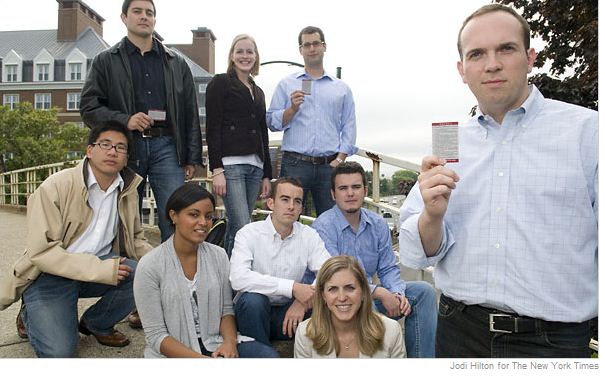
That’s why I was scratching my head a little bit when I read this article in the paper today about a project at the Harvard Business School about a de facto Hippocratic Oath for business people.  The title of the article refers to “an Era of Temptation” and I think that’s the wrong way to look at this problem.  Temptation has been with us since someone bit into an apple a while back.  Organized religion creates a fear of accountability and couples it with a community of whoever attends that group.  For all of the things organized religion has going against it, I have to say they still seem to have community and the fear of accountability, some call the fear of god.  Temptation has always been there, it’s not a new “era” of it, people have simply figured out that we are in an era of no accountability – and that is what needs to change.    So some of the people in financial services and automotive need to be held accountable, and I am not seeing any of that.  Community will also need to be there and my guess is that this Harvard effort is a step in the right direction, but something more programmatic is needed to really get the outcome we need.

These people aren’t doing things in secret or in private, they are doing them right out in broad daylight like running a stop sign. In an era of We Live in Public, if we don’t get more aggressive about accountability coming up with an equivalent to a “fear of God”, chaos is the next stop sign where we have to make a decision to stop or go.

-Ric
Category : Uncategorized | Blog
27
May

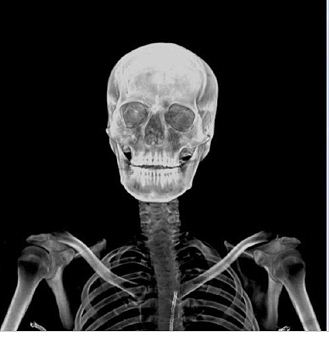
1_skullIn this article in The New York Times today, Denise Grady explains that for the first time in our history, the US military has been performing CT scans and X-rays of our war dead since 2004, and the lessons learned have caused changes in many areas.  I spend most of my days encouraging people to start their discussions around the specific outcomes they are achieving, the “what” they are doing before asking how to get there.  Getting statistics on how people are dying in wars, and in fact how to better treat the injured is enabling the military to improve many outcomes, not the least of which is bringing soldiers home breathing.

The article talks about how the x-rays show not only the specifics of the shrapnel that kills the soldiers, but also where the shrapnel hits, so they are able to improve the designs of protective gear.  If you are smarter about what’s coming at you, you can be better at preparing for it in the future, a simple lesson in competition for people in the business world.

But the part I liked best about this story involved improving a technique to help injured soldiers.  It had to do with a Colonel Howard T. Harcke who was doing an autopsy on a soldier who had a collapsed ling.  As you can read in the article, Colonel Harcke figured out that the tubes they were using to re-inflate lungs were almost a third too short.  He could see from the CT scan that the tube was too short to be effective in this one case, but because this case had so many other severe injuries, he couldn’t confirm that was the cause of death, but by being able to look at 100 other similar cases in the data base, he found that the tube was too short for 50% of the group he looked at, and came to the conclusion that “solders are bigger and stronger now” and it’s no secret that our population has gotten bigger.  Going from the current five centimeter length to eight centimeters increased the effectiveness to 99% (so going from a 50% effectiveness rate, that doubles the effectiveness of a common procedure, doubling anything in medicine in this century  is nothing short of kooky),    What a great example of using a set of data to help answer a question about a single instance.

There is so much information about what has happened in the past that can inform how we move forward and post mortems in the workplace can make a huge impact.  Just be thankful you are not in a life and death battle every day like the people Colonel Harcke has to work on.

-Ric

Category : Uncategorized | Blog
25
May

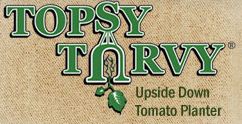
1_tomatoThe other day someone was asking for some outside of work “how” traps that might get people to rethink “how” they go about their day-to-day activities, and boy did I find one.  I was up late the other night watching some movie and an infomercial came on that smacked of an at home “how” trap.

Someone has figured out that tomatoes and some other plants grow very successfully upside down.  Instead of getting dirty on your hands and knees and dealing with sprinklers, you start the plant inside and then at a certain size you put it in this thing that looks to be about the size of a waste paper basket filled with enough dirt and then you hang that on just about anything and the plant grows very fast and down.

Not that I have a very green thumb, but this busts up so many false assumptions I had about “how” to grow plants, literally turning them upside down is the gardening equivalent of the Fosbury Flop that I talk about in the Rethink book where before everyone did the high jump running and jumping face-forward, he turned around 180 degrees and jumped over the bar backwards on his way to an Olympic gold medal.1_tomato2

The web site for this company is hangingtomato.com and while it looks very infomercial-y, I think this is just such a great example of rethinking I had to say a few words about it.

I am going to do some more poking around about why it only works with some plants, where in some cases the “how” matters more than others.  Well done.

Category : Uncategorized | Blog
24
May

reallypeople

I confess.  I enjoy reading People at the dentist.

But this morning I debated, briefly, whether to write about how hard it is for me to believe that in 2009 there are online advertisements for mail order Russian brides, or a common topic in several articles the Sunday New York Times, I went with the latter.

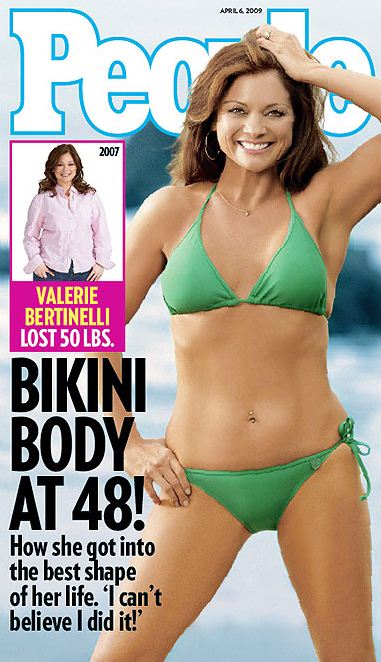
Often when I read the Sunday paper, there seems to be an improbably common thread throughout several sections of the paper.  This morning was no exception, and as I read the interview with Frank Luntz “The Wordsmith” he talked about the subtitle of his book Words That Word “It’s Not What You Say, It’s What People Hear.” I thought that was a great expression that a lot of people miss.  Then as I got to the Sunday Styles section, there was an article about how successful People magazine remains as so many publishers struggle, and the article went on about how critical the cover is in selling magazines and how hard they work to find covers that appeal to the baby boomer generation as well as teenagers (specifically discussing a hugely successful picture of a 48 year-old former teenage star in a bikini).  As fluffy as the magazine is – appealing to such different demographics every week with one picture is hard work.

Then as I read the article in the magazine about Conan O’Brien replacing Jay Leno on The Tonight Show starting next Monday (set your Tivo), it talked about how Leno still does 160 stand up shows a year all over the country adding “it’s the best way to take the temperature of the country” and later talked about how one of the reasons Leno got that job over David Letterman was because he went out and met with many NBC affiliates in the “interview” process and Letterman did not (adding that the affiliates have a loud voice in decisions like that).   It was a pretty interesting article that talked about how different Leno and O’Brien are.

When I talk to organizations about what’s most valuable to them, one of the three pillars of my definition of value is brand or identity, why customers, partners, and employees choose them over another (the other two being linkage to key performance indicators, and whether there’s value in improving the performance of whatever is being discussed).  These three very different articles bring out three keys that I think a lot of organizations need to look at right now as this recession persists:

1) Like People magazine, be really specific about who you are selling to, and be sure that how you connect with them will resonate

2) To put a Luntzian spin on it – be very aware of what your customers are hearing you say, not just what you are saying

3) And in the case of Leno, stay in touch with your audience.  Don’t lock yourself in a room, or on a campus as the case may be for some companies, and think you know the “temperature” of your customer.

So get on with rethinking who you are talking to, what your message is, and what’s being heard.  And look at the calendar, I am due for a cleaning at the dentist.

-Ric

Category : Uncategorized | Blog
21
May

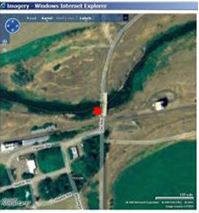
11_onThe cars themselves may still have a long way to go, but some recent announcements about what OnStar can do are amazing.  OnStar being the service offered by General Motors that incorporates GPS  and communication into vehicles – particularly useful in crash situations (though they can also unlock your car for you if you lock the keys in the car). Not so long ago, OnStar started advertising that when a vehicle is in an accident, OnStar will immediately put a phone operator in touch with the onboard communications center in the vehicle to determine if the driver is conscious and if they need emergency assistance.  The ad showed the phone operator on one half of the screen saying something like “do you need help?” and the injured driver responds “yes.”   From there, because the operator has the GPS information they can transmit the coordinates to local emergency teams.    I also learned that OnStar recently switched to Microsoft Virtual Earth for mapping to better visualize and communicate the precise location of the accident.  All very impressive.

1_map

The part that got me really excited is something I saw advertised in the paper today.   They call it Injury Severity Prediction and I think this is a great example of changing a “how” in emergency response and in a way it parallels things like the ATM and airport check-in today, but I will get to that in a moment.    We know that the auto industry has all kinds of statistics on crashes and how much worse you will be injured if you aren’t wearing your seatbelt or how different a side impact is versus a head on, and how much speed impacts injuries, and so on.  Well, from what I can tell, OnStar is now taking a lot of that data and putting it in the car,  and when the car is in an accident, the car takes the equivalent of a data snapshot of that information at the point of impact (are they wearing seat belts, head on or not, what speed, etc.) and communicates that back to the OnStar operator immediately and they can then instantly make some pretty good assumptions about the severity of the accident and communicate that objective, trustworthy data to emergency teams so they can be sure to take the right equipment.  In a situation where what matters is accurate and timely communication, this is a brilliant application of statistics and technology. “How” the information gets to emergency crews  gets much better and faster.

So how is this similar to the ATM and airport check-in?  Those are both cases where work was “outsourced” to the customer, where the customer now does the work of the bank teller and the passenger does the work of the airline employee.  With OnStar Injury Severity Prediction we have a case of the communication being “outsourced” to the car in a way that is a lot faster, a lot more reliable, and in cases where the driver is unconscious it makes something possible that wasn’t imaginable ten years ago.  Bravo OnStar.

Now why don’t you loan some of your smart people to other areas of GM to help them rethink other parts of the business.

-Ric

Category : Uncategorized | Blog
20
May

1bloggraphicMany people remember the scene in the movie This is Spinal Tap where the character played by Christopher Guest, Nigel is explaining to Rob Reiner that his amplifiers have the ability to be louder than any other amplifier, showing him that they go to “11″ on the dial instead of the usual ten.  Rob Reiner asks why they don’t just adjust each notch on the dial so each is just a little louder and have it just go to ten like everyone else, and Nigel looks at him as if he’s a complete idiot (a moment of thick irony) and reminds him “but these go to eleven.”


11_bigSo when I recently saw this blog entry “25 logos with hidden messages” out at graphicdesignblog.org, I saw the FedEx logo that I often talk about with the hidden arrow, and I also saw the new logo for the Big Ten college sports conference I couldn’t help but laugh a little.  And I expect Nigel would also crack a grin.

I am a medium sports fan, so I was aware that Penn State was added to the Big Ten conference making a conference of eleven, and I remembered thinking it would just become the big 11, no big deal.

Not so much according to this blog posting.  Evidently they felt there was so much brand equity in Big Ten they couldn’t change to Big Eleven (I actually think it would be written Big11 if they were to follow Strunk and White).

So their idea of a solution was to put the number 11 in the middle of the logo, almost like columns holding up the “T” in ten. Umm.  Really? Wow.  That’s “truth is stranger than fiction” funny.

Luckily, Penn State is a big program, so I am sure there was no debate about fractions, like a Big Ten and a Half, but to have eleven schools in a group that is honestly all about the schools, I think it sends a pretty bad message all around about the intelligence of the conference.  I vote they rethink the name and have it be Big11.  Otherwise it’s the conference of 11 schools known as the Bit Ten, and that’s just not thinking.

Maybe we should ask Nigel what he thinks.

-Ric

Category : Uncategorized | Blog
19
May

a_nbcThis morning I was reading my trusty New York Times and I came across a full page ad for the Jay Leno Show.  Hoping to post an image of the ad in this post, try finding an ad like that in an internet search . . . Anyway, right in the middle of the page it reads  “DVR-PROOF programming year-round” and immediately started wondering where NBC is going with this.  First of all, it’s an ad aimed at advertisers, and if that weren’t obvious from that line, the next line “Live ads in Leno generate 152% higher brand recall than similar branded content in primetime,” well that removes any lingering doubt.  Second, and more importantly, the DVR-PROOF label is an obvious reaction to the popularity of TIVO and other Digital Video Recording devices that are in many ways the evolution of the VCR.

I have seen a number of articles about how the success of the DVR means more people are able to fast forward through ads, and the advertisers are not only not getting the “impressions” they are paying for and that makes it hard to get to their customers.

So it’s a clear case of needing to rethink “how” to connect with the customer.

Some marketers have resorted to integrating their products into the programs, where the stars are using the products, and that seems pretty smart to me.  Recently the American Idol program had the remaining contestants on the show do a spot for Ford that aired on the show, and that seemed like a good idea, but not DVR-PROOF.  I am a little surprised some haven’t experimented with ads that work in both fast forward and regular speed – you could have a large stationary picture of the product (like a Pepsi billboard) in the background so when the person fast forwards, the person still gets the impression, and there are probably even more clever ways than that.  I think that would be clever and effective.

But DVR-PROOF sounds like NBC is trying to keep TV in the 20th century and we have seen a number of efforts like that in the past (like forcing YouTube to remove their content) and that is just not smart.  There may be some calculated gamble that the kind of people who will watch this new show aren’t really the DVR crowd, but the simple point is that they shouldn’t resist the DVR trend, denying it won’t make it go away.

NBC needs to figure out how to help their advertisers get to their markets in a post DVR world.

That’s what I think.

-Ric

Category : Uncategorized | Blog
18
May

This webinar was put on by the Institute Four Corporate Productivity, i4cp, and it got the third highest rating of any webinar in their history.

Click here to download and watch the webinar.  http://www.i4cp.com/file/media/is-it-time-to-rethink-your-business/download

Category : news | Blog
17
May

tweet

Abraham Lincoln is quoted with saying “I would have written a shorter note if I had time.”  Twitter is in some ways forcing that shortening habit.

Having recently, reluctantly, joined the ranks of Twitter, and only very recently begun to wrap my brain around this phenomenon, I have to wonder if Twitter, and to a lesser effect Facebook are going to transform a major “how” we do something in the workplace.  E-mail.  And while I am still no fan of Twitter, my guess is that this Twitter effect is a mostly positive one.

I distinctly remember long conversational e-mail discussions ten or more years ago.  From time to time I still see a long e-mail, but even then it is broken up with bullets and indentations making it look more like a PowerPoint slide than a letter.

Twitter only allows you to type 140 characters, and while most people also put a link to a longer blog entry (or mad or something) so they can give you at least an entire thought, and Facebook also has some limitations on characters in some of their message formats, I think the “good” change is that it forces people to condense their message into a small space. To think before you just spew text into an e-mail.

It has to be enough of a hook to at least get people to click on the link.   Forcing people to boil their idea down into 140 characters is a good skill to build and I honestly think it will end up making e-mail communication more efficient (though Emily Post would barf on the spot if she witnessed our modern day e-etiquette).

That’s what I think.  Now I am off to host a birthday party for an eight year-old boy on a BEAUTIFUL sunny day in Seattle.

-Ric

P.S. Yes, I was tempted to confine this blog post to 140 characters, but like Abe I didn’t have time.

Category : Uncategorized | Blog